
Wigs are not all the same. The material used to make a wig affects how it looks, feels, lasts, and can be styled. Let’s break it down clearly.
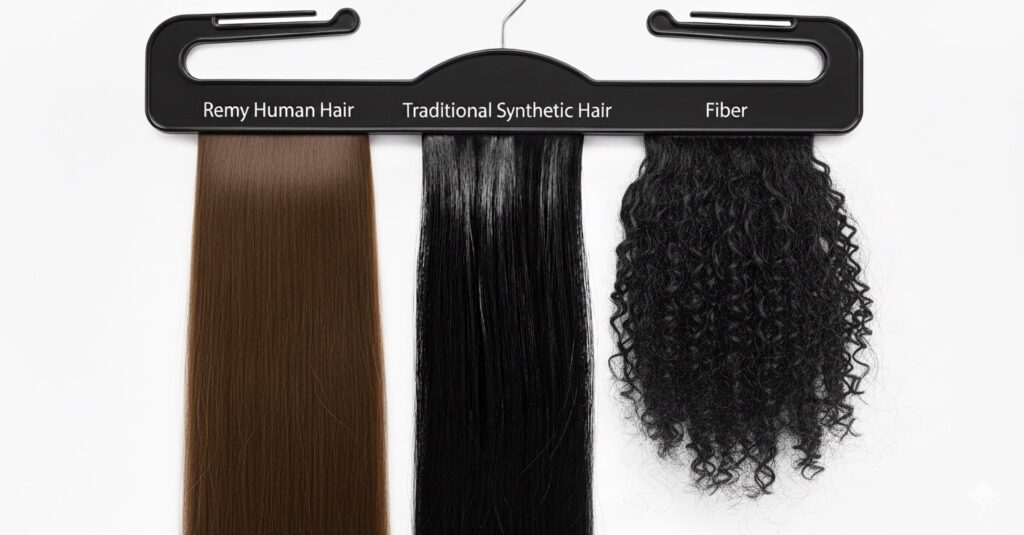
1. Synthetic Wigs
What they’re made from:
Synthetic wigs are made of plastic fibers. Most often, these are kanekalon, toyokalon, or other synthetic polymers. These fibers are designed to mimic the appearance of real hair but are not alive, soft, or natural.
How they behave:
- The fibers are shiny and smooth, but this shine often looks fake in natural light.
- They cannot handle heat well — curling irons, straighteners, or blow dryers can melt or frizz the fibers.
- Color is permanent and cannot be dyed without ruining the wig.
Lifespan: 1–3 months with careful use. Daily wear, heat, or brushing quickly damages the fibers.
Why they disappoint:
Synthetic wigs may be cheap and easy to use initially, but they look fake, feel stiff, and limit your styling options. They are a temporary solution and never give the elegance or realism of real hair.
2. Fiber Wigs
What they’re made from:
Fiber wigs are made of high-tech synthetic blends, often labeled as “premium fibers” or “heat-resistant fibers.” They try to mimic human hair better than cheap synthetics, but they are still man-made polymers, not actual hair.
How they behave:
- They are slightly softer than normal synthetic wigs, but still stiff compared to real hair.
- Some allow low-heat styling (like 120–150°C), but higher heat will damage the fibers.
- They are sometimes marketed as “luxury synthetic” or “blended fibers,” but cannot achieve full realism or flexibility.
Lifespan: 2–6 months, depending on wear and care. They tangle and shed faster than human hair.
Why they disappoint:
Fiber wigs look better than cheap synthetics but fail to move naturally, cannot fully be styled, and never feel as soft or luxurious as human hair. They are a compromise — not a solution.
3. Human Hair Wigs – The Hero
What they’re made from:
Human hair wigs are made entirely of real, unprocessed human hair. This can come from donors around the world — often Remy hair, meaning the hair is collected with all cuticles intact and aligned in the same direction. Some common types include:
- Virgin Hair: Hair that has never been chemically processed.
- Remy Hair: Hair with aligned cuticles for tangle-free, smooth texture.
- Brazilian Hair: Thick, soft, and versatile.
- Indian Hair: Lightweight, naturally wavy, very soft.
- Malaysian Hair: Silky, glossy, slightly heavier than Indian hair.
How they behave:
- Completely natural look: Moves, shines, and flows like your own hair.
- Full styling freedom: Can be dyed, curled, straightened, or styled repeatedly.
- Long lifespan: With proper care, can last 1–3 years or more.
- Comfortable and breathable: Feels light on the head, gentle on the scalp.
- Protective for natural hair: Can be used to cover thinning areas or protect your own hair from damage.
Why they are the hero:
Human hair wigs give you freedom, elegance, and confidence. They don’t look fake, they can be styled any way you want, and they last far longer than synthetic or fiber wigs. They truly transform your appearance while staying natural and soft.
Comparison Table
| Type | Material | Styling | Lifespan | Look & Feel | Comfort |
| Synthetic | Plastic fibers (kanekalon, toyokalon) | Cannot heat or dye | 1–3 months | Fake, stiff | Uncomfortable |
| Fiber | Synthetic polymer blends | Limited heat styling | 2–6 months | Slightly better than synthetic | Less comfortable |
| Human Hair | 100% real human hair (Remy, Virgin, Brazilian, Indian, Malaysian) | Can heat, dye, cut, style freely | 1–3+ years | Natural, elegant, soft | Comfortable, breathable |
The takeaway: Only human hair wigs give you natural movement, long-lasting style, styling freedom, comfort, and confidence. Synthetic and fiber wigs might look okay for a day or two, but they are never a true solution.